


| SEARCH |
-

Nov 17, 2015
Reflections on a three-decade legacy
The International Geosphere-Biosphere Programme (IGBP) will come to a close at t...
-
Nov 17, 2015
Use of and access to content on this website
Text and images produced by IGBP in house are free to use with appropriate credi...
-
Nov 12, 2015
Bella Gaia performance and panel discussion to mark IGBP's closure
A musical performance by Bella Gaia will celebrate the achievements and legacy o...
-

Towards Future Earth:
evolution or revolution?
During its three decades of existence, the International Geosphere-Biosphere Pro...
-
A personal note on IGBP and the social sciences
Humans are an integral component of the Earth system as conceptualised by IGBP. João Morais recalls key milestones in IGBP’s engagement with the social sciences and offers some words of advice for Future Earth.
-
IGBP and Earth observation:
a co-evolution
The iconic images of Earth beamed back by the earliest spacecraft helped to galvanise interest in our planet’s environment. The subsequent evolution and development of satellites for Earth observation has been intricately linked with that of IGBP and other global-change research programmes, write Jack Kaye and Cat Downy .
-
Deltas at risk
Around 500 million people worldwide live on deltas, but many of the world's deltas are sinking due ...
-
Climate change: the state of the science
A new data visualization released on the first day of the plenary negotiations at the UNFCCC’s clima...
-
Climate Change:
the State of the Science
Videos now online from the Stockholm public forum to mark the launch of the IPCC's climate report, 2...
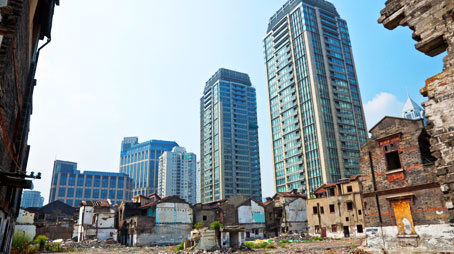
A changing Earth system
The Earth system is our planet's interacting physical, chemical, and biological processes. It consists of the land, oceans, atmosphere and poles. It includes the planet´s natural cycles — the carbon, water, nitrogen, phosphorus, sulphur and other cycles — and deep Earth processes.
Life too is an integral part of the Earth system. Life affects the carbon, nitrogen, water, oxygen and many other cycles and processes. Humans are part of the Earth system and have now become a major driver of change within the system.
Recent Earth-system research has compiled a detailed picture of how the Earth system has functioned over the last hundreds, thousands and millions of years.
The research shows that human activities are having a profound influence on the global climatic and environmental systems.
But it is also evident that these systems exhibited a range of natural variability in the past that went beyond what can be observed and measured today.
Key findings include:
• The current increase of greenhouse gases in the atmosphere occurs at a rate that is unprecedented during at least the last 16,000 years.
• Today´s concentrations of carbon dioxide and methane exceed by far the natural range of the last 800,000 years.
• Antarctic carbon dioxide and temperature co-varied over the last 800,000 years, indicating a close relationship between climate and the carbon cycle.
• The Last Glacial Maximum (ice age) was 4-7°C colder than the pre-industrial late Holocene (the Holocene period is 11,000 years to present), with high-latitude cooling more pronounced than the global average.
• Glacial-interglacial cycles were driven by changes in Earth´s orbit and tilt relative to the sun. This altered slightly how much energy Earth received from the sun. Energy changes were then amplified by changes in greenhouse gas concentrations, ice sheet extent and feedbacks associated with ocean circulation, sea ice, dust, and biophysical processes.
• Marine carbon-cycle processes were primarily responsible for the carbon dioxide variations between glacials and interglacials.
• The global warming that ended the Last Glacial Maximum (ice age) happened at an order of magnitude more slowly than the 20th century warming.
• The North Atlantic region experienced repeated abrupt warmings and coolings during the last glacial period. These occurred within decades and had climatic implications in remote regions around the globe.
• The structure and composition of regional vegetation is sensitive to climate change and can respond within decades.
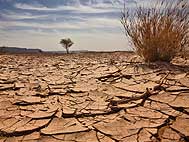
• The intensity of the African-Asian summer monsoon and the regional frequency of tropical cyclones, floods and droughts changed on decadal to centennial timescales over the last 10,000 years.
• The current increase in carbon dioxide and greenhouse gas forcing is at least five times faster than at any time during the pre-industrial era of the last two millennia.
• The warmth of the Northern Hemisphere during the second half of the 20th century was exceptional in its amplitude and hemispheric spread compared with the last 500 years and probably even 1300 years.
• Droughts lasting decades or longer were a recurrent climatic feature in northern and eastern Africa and the Americas over the last 2,000 years.
• Climate models can simulate the Northern Hemisphere temperature trends of the last millennium based on natural forcings but require anthropogenic greenhouse gas forcing to simulate the temperature rise of the last half-century.
Adapted from Steffen et al, Global Change and the Earth System, 2004 (pdf, 4.2 MB)





IGBP closed at the end of 2015. This website is no longer updated.
-

Global Change Magazine No. 84
This final issue of the magazine takes stock of IGBP’s scientific and institutional accomplishments as well as its contributions to policy and capacity building. It features interviews of several past...
-

Global Change Magazine No. 83
This issue features a special section on carbon. You can read about peak greenhouse-gas emissions in China, the mitigation of black carbon emissions and the effect of the 2010-2011 La Niña event on gl...
-
INTERGOVERNMENTAL PANEL ON CLIMATE CHANGE:
How green is my future?
UN panel foresees big growth in renewable energy, but policies will dictate just how big.
-
UK:
'The Anthropocene: a new epoch of geological time?'
Royal Society, Philosphical Transactions A